Mechanical Computation (TW5)
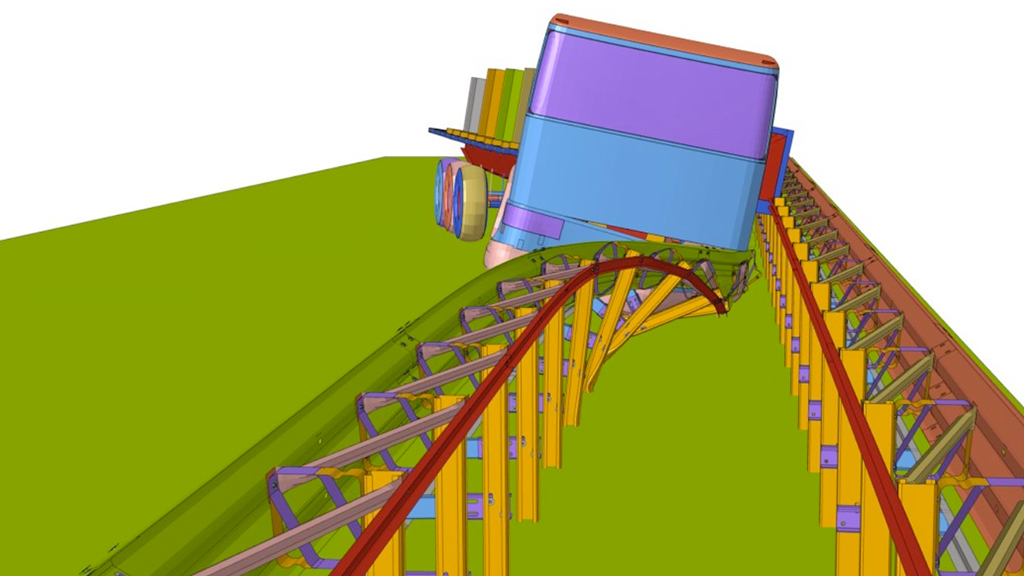
Integration of real-life crash tests with virtual crash tests.
Computational mechanics is making great strides in its reliability, and although, at least at present, it cannot replace crash tests even in part, it can, however, provide interesting insights for analyzing d uro scenarios other than the standard ones. What happens, for example, if the point of impact varies from the point of crash? Or if the device length or terminal type changes? And for a crash-tested transition, what happens if the upstream and downstream barriers change?
For computational mechanics to be truly effective, however, they need to be performed by trained personnel, in line with the requirements of EN 16303 and, most importantly, the test scenarios must be truly representative and provide a meaningful enhancement of the safety of the device.
Intoroads is analyzing, for the different situations where computational mechanics can provide an additional contribution, a set of scenarios and criteria to be shared with operators that can constitute a guideline for the use of numerical simulations, using them in a timely and effective manner.